Steadier, longer ride
Day catamarans take about 1.5 to 2 hours. A wide catamaran gives you room to sit in the middle, in the shade, with the horizon in view.
Catamaran toursCrossing times, where to sit and how to prepare
Worried that seasickness might spoil your visit to Klein Curaçao? It helps to know what the crossing involves before you book. The boat, sea conditions and your own sensitivity all affect how you experience the journey. Here we explain the differences that matter, how to prepare and what to do if you start feeling unwell.
Crossing time is the ride one way. The whole trip, including your hours on the island, takes much longer.
| Feature | 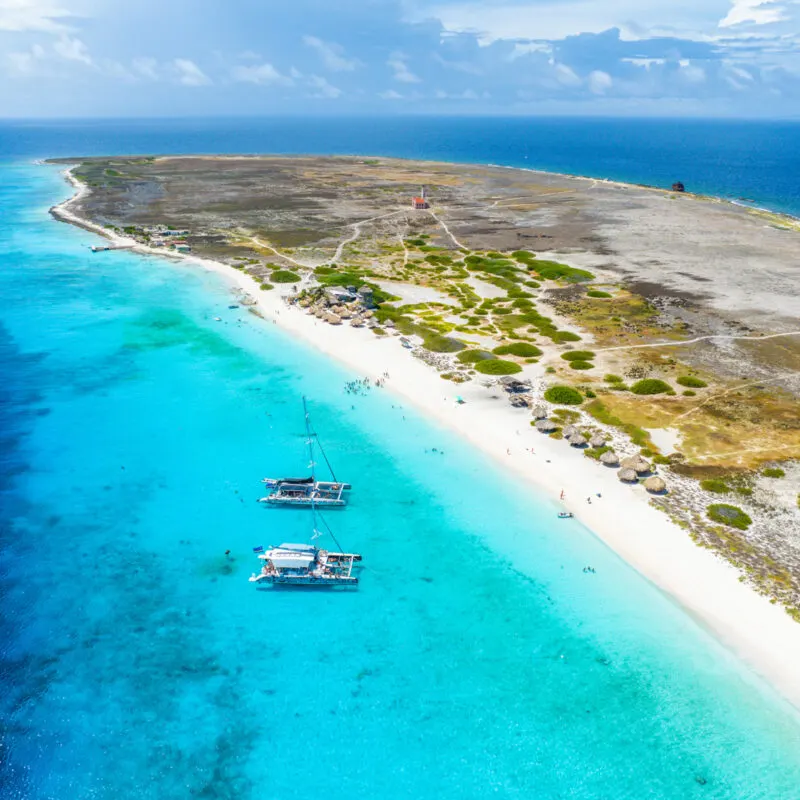 | 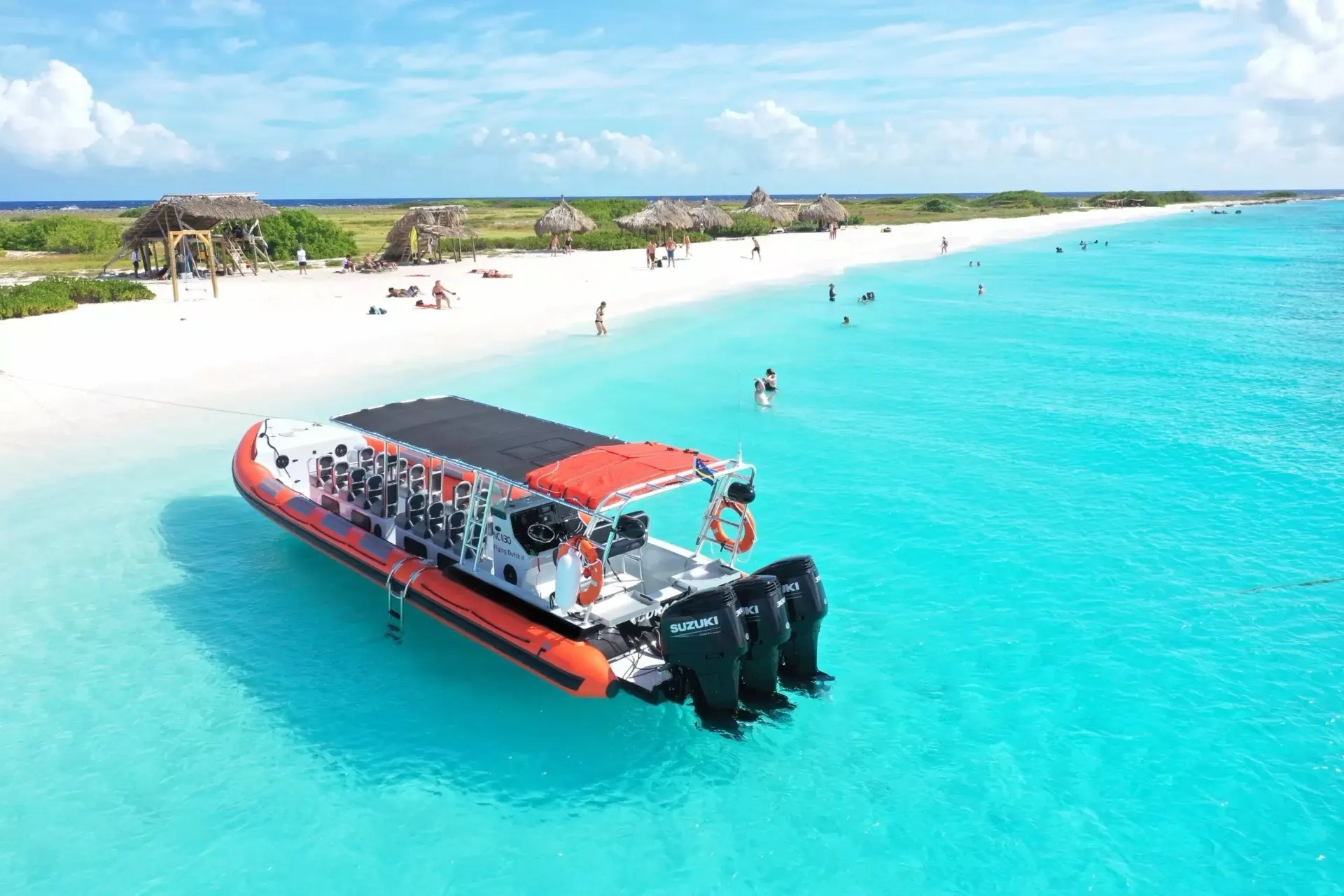 | 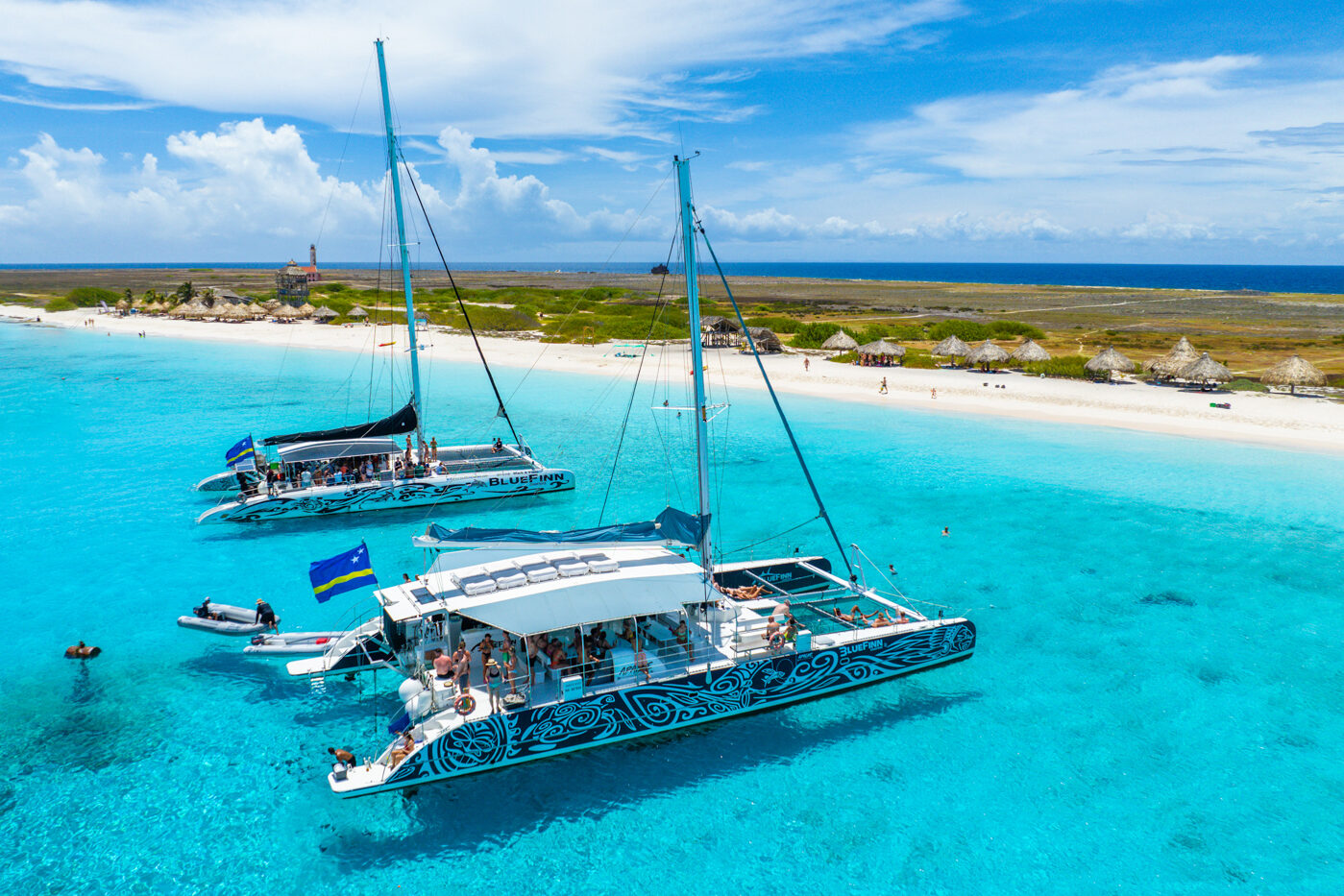 Klein Curaçao Sunset Catamaran $165,- per ticket | 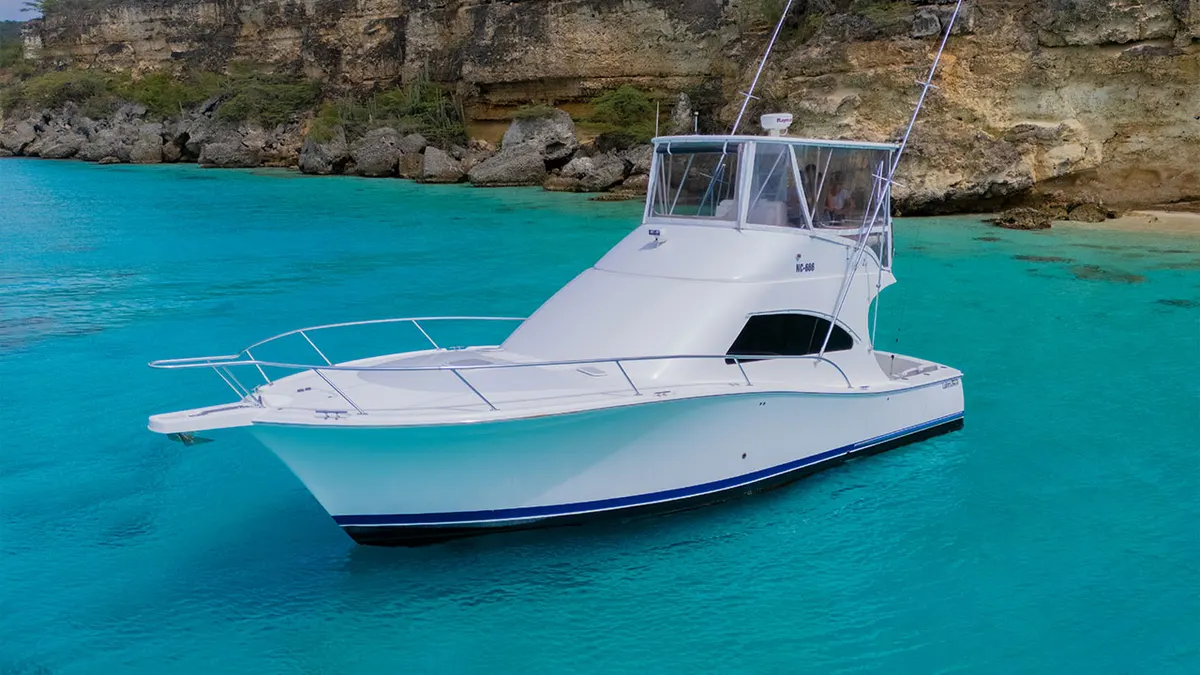 | 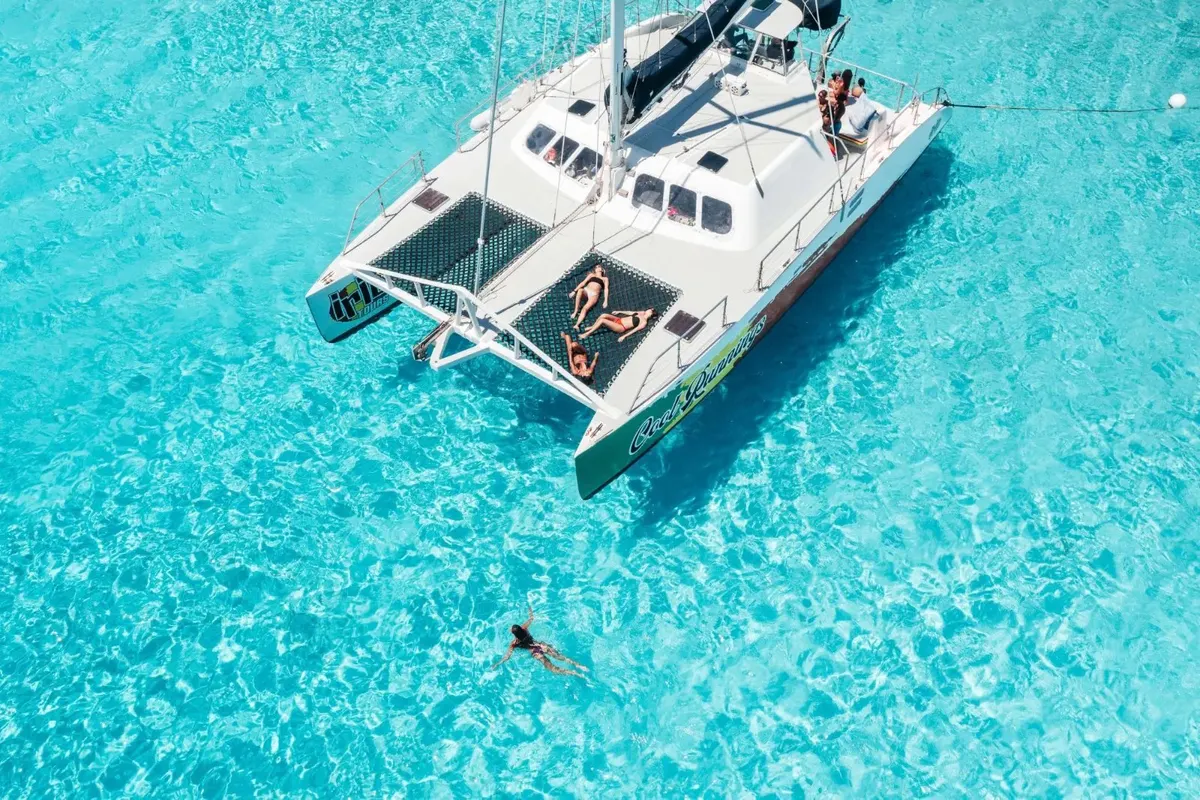 | 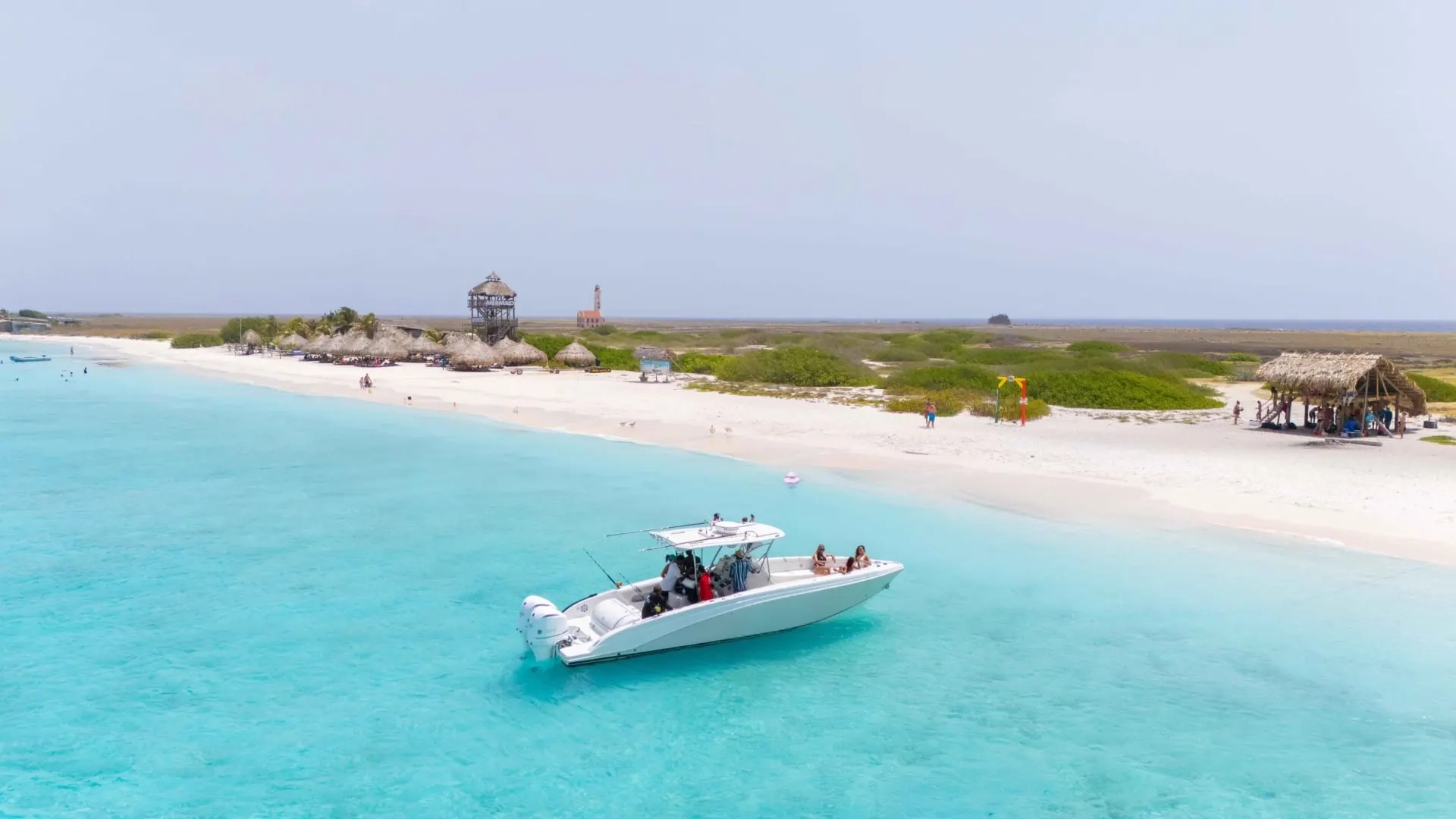 |
|---|---|---|---|---|---|---|
| Duration | 8.5 hours | 6 hours | 8 hours | 8 hours | 9 hours | 6 hours |
| Crossing time | 105 min | 45 min | 105 min | 75 min | 90 min | 75 min |
| Book now | Book now | Book now | Book now | Book now | Book now |
No boat is seasick-proof. It comes down to what you prefer: a shorter ride or a steadier one.
Day catamarans take about 1.5 to 2 hours. A wide catamaran gives you room to sit in the middle, in the shade, with the horizon in view.
Catamaran toursThe powerboat crosses in about 45 minutes and usually faster on the way back. It is a small, fast boat, so the ride can feel bumpy and you may get wet. Not suitable for back or neck problems or during pregnancy.
Powerboat tripPrivate boats cross in about 1 to 1.25 hours. You share the boat only with your own group and agree the departure time with the operator.
Private toursA catamaran usually takes around 1.5 to 2 hours to reach Klein Curaçao. A powerboat makes the crossing in about 45 minutes. These are approximate times: wind, waves and the particular boat affect the journey. A larger catamaran can feel steadier, but you spend longer at sea. A powerboat gets you there sooner, although the ride can be bumpy. Neither option guarantees that you will avoid seasickness. If previous boat trips have made you very unwell, tell us before you book. We can help you compare the boats and crossing times. A pharmacist or doctor can advise you on managing the seasickness itself.
Yes. A larger catamaran can feel steadier, but it still moves with the sea. Boat size and type do not guarantee a crossing without nausea. Prepare beforehand if you know you are sensitive to motion.
The return crossing often feels calmer because the boat travels more with the waves. This varies with the conditions that day, so do not assume you will have no symptoms on the way back.
Tell the crew straight away. Ask them to help you find a suitable seat, look towards the horizon and put your phone away. Follow their instructions if you need to move around the boat.
Some people find them helpful, but evidence of their effectiveness against motion sickness is limited or inconsistent. If you have had severe seasickness before, do not rely on them as your only preparation. Discuss suitable options with a pharmacist or doctor.
Tell the crew before departure and ask a pharmacist or doctor which remedies, if any, are suitable for your child’s age. A product intended for adults is not automatically suitable for children. Also check the tour’s age requirements before booking.
Compare the catamaran and the powerboat side by side before you book.